Alexandre REMY // Charleroi posted a photo:
h0n3yb33z posted a photo:
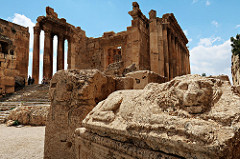
Temple of Bacchus may refer to any temple to the Roman wine god Bacchus or to temples of other gods with which he was equated in antiquity, such as the Greek Dionysus. However, it often refers specifically to the most famous temple of Bacchus, located in Roman Heliopolis (current Baalbek, Lebanon). It is one of the best preserved and grandest Roman temple ruins in the world. It and its ornamentation served as an influential model for Neoclassical architecture. The temple was commissioned by Roman Emperor Antoninus Pius and designed by an unknown architect and built close to the courtyard in front of the larger temple of Jupiter-Baal. The period of construction is generally considered between 150 AD to 250 AD. When the temple complex fell into disrepair, the Temple of Bacchus was protected by the rubble of the rest of the site’s ruins. The temple is known for its impressive dimensions, richly decorated stone work and monumental gate with Bacchic figures. The decorative stone carving includes rows of lions and bulls, which were motifs symbolically associated with the two deities.
h0n3yb33z posted a photo:
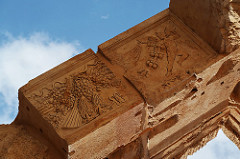
Temple of Bacchus may refer to any temple to the Roman wine god Bacchus or to temples of other gods with which he was equated in antiquity, such as the Greek Dionysus. However, it often refers specifically to the most famous temple of Bacchus, located in Roman Heliopolis (current Baalbek, Lebanon). It is one of the best preserved and grandest Roman temple ruins in the world. It and its ornamentation served as an influential model for Neoclassical architecture. The temple was commissioned by Roman Emperor Antoninus Pius and designed by an unknown architect and built close to the courtyard in front of the larger temple of Jupiter-Baal. The period of construction is generally considered between 150 AD to 250 AD. When the temple complex fell into disrepair, the Temple of Bacchus was protected by the rubble of the rest of the site’s ruins. The temple is known for its impressive dimensions, richly decorated stone work and monumental gate with Bacchic figures. The decorative stone carving includes rows of lions and bulls, which were motifs symbolically associated with the two deities.
h0n3yb33z posted a photo:
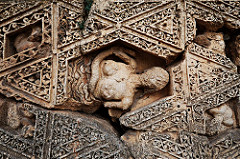
Temple of Bacchus may refer to any temple to the Roman wine god Bacchus or to temples of other gods with which he was equated in antiquity, such as the Greek Dionysus. However, it often refers specifically to the most famous temple of Bacchus, located in Roman Heliopolis (current Baalbek, Lebanon). It is one of the best preserved and grandest Roman temple ruins in the world. It and its ornamentation served as an influential model for Neoclassical architecture. The temple was commissioned by Roman Emperor Antoninus Pius and designed by an unknown architect and built close to the courtyard in front of the larger temple of Jupiter-Baal. The period of construction is generally considered between 150 AD to 250 AD. When the temple complex fell into disrepair, the Temple of Bacchus was protected by the rubble of the rest of the site’s ruins. The temple is known for its impressive dimensions, richly decorated stone work and monumental gate with Bacchic figures. The decorative stone carving includes rows of lions and bulls, which were motifs symbolically associated with the two deities.
h0n3yb33z posted a photo:
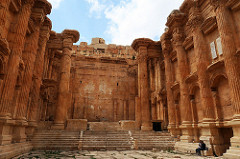
Temple of Bacchus may refer to any temple to the Roman wine god Bacchus or to temples of other gods with which he was equated in antiquity, such as the Greek Dionysus. However, it often refers specifically to the most famous temple of Bacchus, located in Roman Heliopolis (current Baalbek, Lebanon). It is one of the best preserved and grandest Roman temple ruins in the world. It and its ornamentation served as an influential model for Neoclassical architecture. The temple was commissioned by Roman Emperor Antoninus Pius and designed by an unknown architect and built close to the courtyard in front of the larger temple of Jupiter-Baal. The period of construction is generally considered between 150 AD to 250 AD. When the temple complex fell into disrepair, the Temple of Bacchus was protected by the rubble of the rest of the site’s ruins. The temple is known for its impressive dimensions, richly decorated stone work and monumental gate with Bacchic figures. The decorative stone carving includes rows of lions and bulls, which were motifs symbolically associated with the two deities.
h0n3yb33z posted a photo:
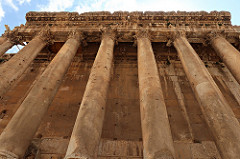
Temple of Bacchus may refer to any temple to the Roman wine god Bacchus or to temples of other gods with which he was equated in antiquity, such as the Greek Dionysus. However, it often refers specifically to the most famous temple of Bacchus, located in Roman Heliopolis (current Baalbek, Lebanon). It is one of the best preserved and grandest Roman temple ruins in the world. It and its ornamentation served as an influential model for Neoclassical architecture. The temple was commissioned by Roman Emperor Antoninus Pius and designed by an unknown architect and built close to the courtyard in front of the larger temple of Jupiter-Baal. The period of construction is generally considered between 150 AD to 250 AD. When the temple complex fell into disrepair, the Temple of Bacchus was protected by the rubble of the rest of the site’s ruins. The temple is known for its impressive dimensions, richly decorated stone work and monumental gate with Bacchic figures. The decorative stone carving includes rows of lions and bulls, which were motifs symbolically associated with the two deities.
h0n3yb33z posted a photo:
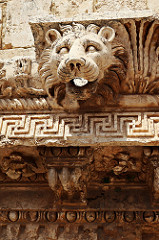
In 1984, Ballbek was added to the UNESCO list of World Heritage Sites. This Phoenician city, where a triad of deities was worshipped, was known as Heliopolis during the Hellenistic period. It retained its religious function during Roman times, when the sanctuary of the Heliopolitan Jupiter attracted thousands of pilgrims. Baalbek, with its colossal structures, is one of the finest examples of Imperial Roman architecture at its apogee.
h0n3yb33z posted a photo:
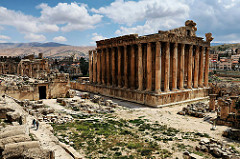
Temple of Bacchus may refer to any temple to the Roman wine god Bacchus or to temples of other gods with which he was equated in antiquity, such as the Greek Dionysus. However, it often refers specifically to the most famous temple of Bacchus, located in Roman Heliopolis (current Baalbek, Lebanon). It is one of the best preserved and grandest Roman temple ruins in the world. It and its ornamentation served as an influential model for Neoclassical architecture. The temple was commissioned by Roman Emperor Antoninus Pius and designed by an unknown architect and built close to the courtyard in front of the larger temple of Jupiter-Baal. The period of construction is generally considered between 150 AD to 250 AD. When the temple complex fell into disrepair, the Temple of Bacchus was protected by the rubble of the rest of the site’s ruins. The temple is known for its impressive dimensions, richly decorated stone work and monumental gate with Bacchic figures. The decorative stone carving includes rows of lions and bulls, which were motifs symbolically associated with the two deities.
h0n3yb33z posted a photo:
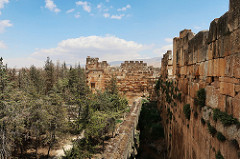
From 15 BC to AD 193, it formed part of the territory of Berytus. It is mentioned in Josephus, Pliny, Strabo, and Ptolemy and on coins of nearly every emperor from Nerva to Gallienus. The 1st-century Pliny did not number it among the Decapolis, the "Ten Cities" of Coelesyria, while the 2nd-century Ptolemy did. The population likely varied seasonally with market fairs and the schedules of the Indian monsoon and caravans to the coast and interior.
h0n3yb33z posted a photo:
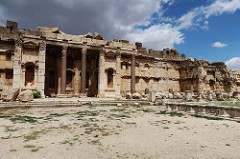
In 1984, Ballbek was added to the UNESCO list of World Heritage Sites. This Phoenician city, where a triad of deities was worshipped, was known as Heliopolis during the Hellenistic period. It retained its religious function during Roman times, when the sanctuary of the Heliopolitan Jupiter attracted thousands of pilgrims. Baalbek, with its colossal structures, is one of the finest examples of Imperial Roman architecture at its apogee.